


CaetanoBus deploys H2 BRT system in Porto
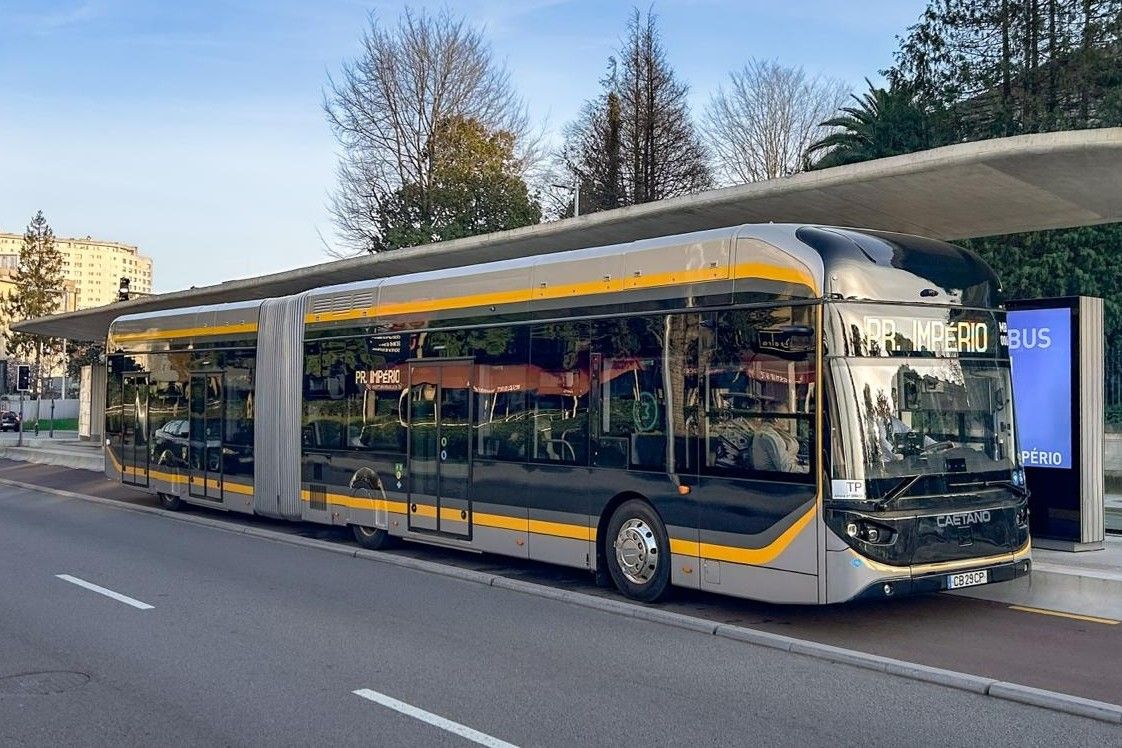
With this project, CaetanoBus is pursuing what it calls a ‘One Face to the Customer’ approach. The Portuguese manufacturer works with selected strategic partners at both project and national levels to deliver an integrated, end-to-end hydrogen mobility solution with a long-term operational commitment.
Under the contract, CaetanoBus assumed overall responsibility for coordinating stakeholders and integrating all core system components. The scope covers the supply of twelve 18-metre H2.CityGold articulated buses, the delivery and integration of a local green hydrogen production unit, the installation and commissioning of hydrogen refuelling infrastructure, and the deployment of on-site photovoltaic systems for renewable power generation. It also includes depot energy management and fleet optimisation systems, the planning of a hydrogen-ready maintenance facility for the fuel cell buses, and long-term maintenance and lifecycle support for the entire ecosystem.
By bundling all technical and operational elements under a single contractual framework, CaetanoBus is positioning itself as the central interface for the customer. The project, developed in cooperation with Metro do Porto, STCP, PRF Gas Solutions and dstsolar, aims to reduce implementation complexity and shorten the operator’s deployment timelines. At the same time, the integrated model is designed to mitigate the total cost of ownership risks associated with large-scale hydrogen mobility projects.
For the Portuguese manufacturer, this project represents a pivotal strategic step in its development, as Nuno Lago de Carvalho, Member of the Executive Committee and CCO at CaetanoBus, emphasised: “By leading the consortium to deliver a fully integrated mobility solution, we demonstrate our capability to structure and manage complex, multi-stakeholder zero-emission mobility ecosystems from design through implementation and real-world operation. Beyond deployment, this project enables CaetanoBus to capture comprehensive technical and economic performance data across the entire lifecycle, from system engineering and infrastructure integration to daily fleet operation. This data-driven approach allows us to simulate, refine and validate a scalable, technically robust and commercially sustainable service model that will support our future Energy & Mobility as a Service offer.”
As a next step in its strategic roadmap, CaetanoBus plans to introduce a pay-per-use model for hydrogen mobility. The concept would enable public and private operators to access the required fleet capacity — together with the associated energy infrastructure and maintenance services — under a fully integrated operating framework.
Instead of high upfront capital expenditure, customers would pay based on kilometres driven, following an operating expenditure (OPEX) model. By shifting costs from CAPEX to predictable operating payments, CaetanoBus aims to lower financial barriers and speed up the adoption of zero-emission transport solutions.
The redundant explanation of the pay-per-use model has been removed to avoid repetition and improve clarity.
Source: Information via email, linkedin.com

0 Comments