


Donut Lab publishes data on charge retention
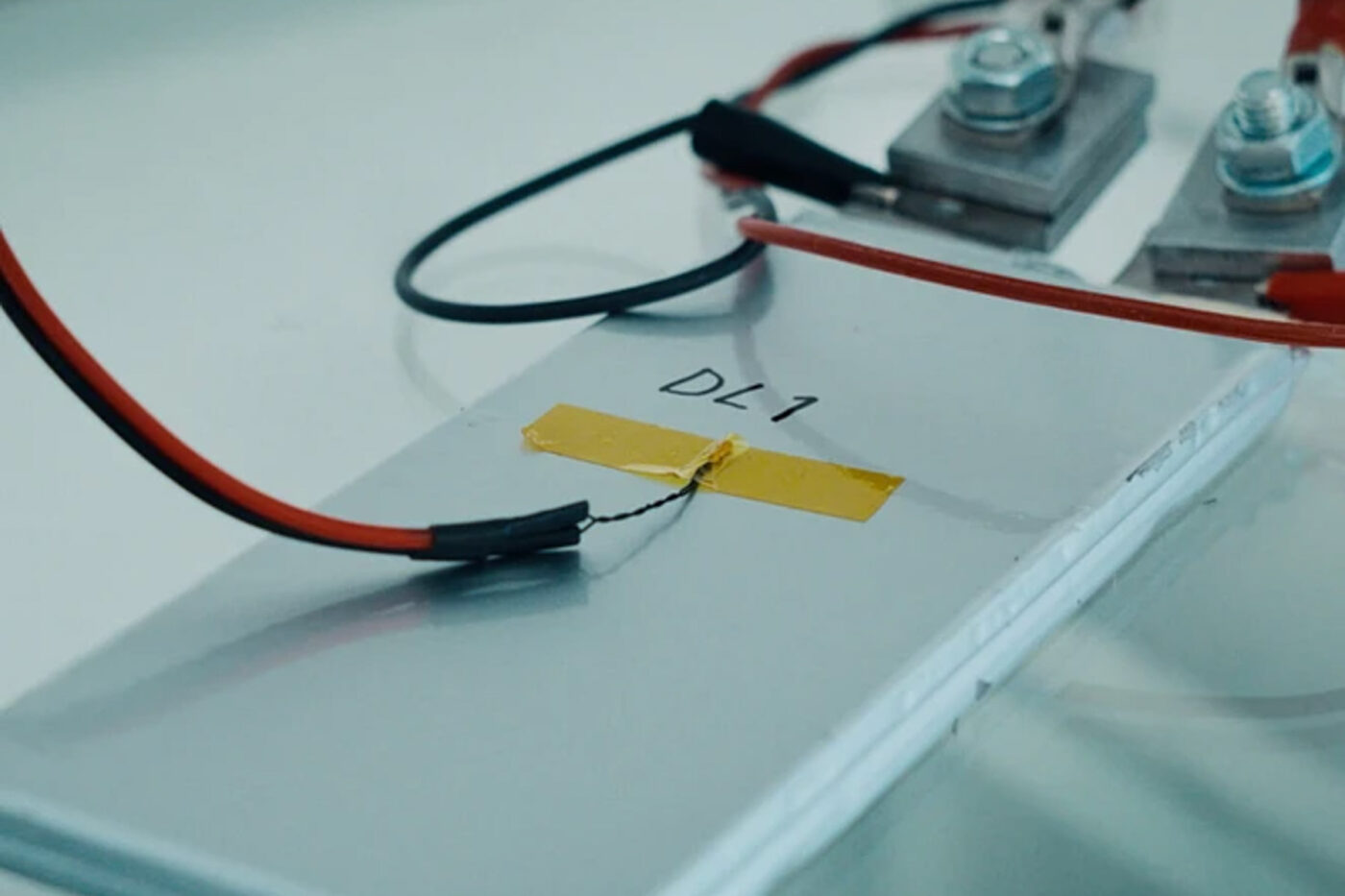
In its first publication of results from tests conducted by the Finnish institute VTT on Donut Lab’s controversial solid-state battery, the focus was on the cell’s fast-charging behaviour. The second test series examined its performance at high temperatures of up to 100 degrees Celsius.
In the third test series, VTT—commissioned by Donut Lab—examined charge retention during non-use. Charge retention is a critical factor, as battery cells and supercapacitors exhibit distinct behaviours in this regard. After Donut Lab announced its own solid-state cell in January 2026 but disclosed only limited key details, speculation arose that the development might not be a battery but rather a high-performance supercapacitor. Critics argued that only this could explain the announced properties, such as an energy density of 400 Wh/kg, a lithium-free chemistry and an exceptional lifespan of 100,000 cycles.
The test itself was remarkably straightforward: the Donut cell (labelled DL-1 for this test) was charged to 50% capacity after the standard 1C capacity test and then stored for ten days at room temperature—previous tests had all been conducted in a climate chamber. During this period, the cell was connected to a VTT testing device, which recorded the cell voltage every ten seconds. Afterwards, the cell was discharged, and the remaining energy capacity was measured.
Supercapacitor theory appears to be refuted
At the start of the ten-day test, the capacity loaded into the cell, according to the VTT protocol, was 13.335 Ah. By the end of the test period, 13.029 Ah could still be discharged. This means the cell retained 97.7% of its original capacity after ten days or 240 hours—equating to a loss of 2.3%. Meanwhile, the measured cell voltage dropped from 3,861 mV to 3,733 mV. However, the voltage decline was not linear: within the first ten seconds, the voltage dropped by 60 mV, and after ten hours, it had fallen by a total of 116 mV. Over the remaining 230 hours, the additional voltage loss was minimal, with the final voltage 128 mV below the starting value.
For context: modern cell chemistries typically experience a capacity loss of 0.5 to 1.0% over the same period. While the Donut Lab cell lost 2.3%, this is not necessarily a poor result, as these are prototype cells likely manufactured by hand. The 0.5 to 1.0% capacity loss benchmark applies to mass-produced batteries manufactured with high precision on fully automated production lines. For prototypes, capacity losses of up to 5% are expected. Additionally, the fact that the voltage dropped only from 3.861 volts to 3.773 volts over 240 hours aligns with the expected behaviour of a battery cell—a supercapacitor would have lost around 50% of its original voltage over the same period.
“Since we unveiled the Donut Battery, there has been a lot of speculation and theories about whether it is a supercapacitor. In all its simplicity, this test proves that it is a battery,” confirmed Ville Piippo, CTO at Donut Lab. “Supercapacitors
charge and discharge quickly, but they also lose their charge quickly when not in use. The Donut Battery behaves like a battery and can maintain a charge for significantly longe.”
At first glance, the data supports this claim. However, even with this third test, Donut Lab cannot entirely dispel all doubts—it remains unclear what exactly is inside the tested cells. VTT also reiterates: “The aim of the project was to conduct an independent self-discharge performance test on the energy storage device
supplied by the customer, which the customer identified as a solid-state battery cell.” The customer stated that it is a solid-state battery cell, but VTT did not independently verify this aspect.
Nevertheless, the third test series addresses another previously raised concern: as the three tests so far were conducted on different cells (DL1, DL2, and DL3), suspicions arose that these might be distinct cells optimised for the respective test criteria—fast charging, heat performance, and charge retention. However, the voltage behaviour observed by VTT during the 1C capacity tests suggests that the cells are more or less identical. That said, this is merely an indication. Final clarity on aspects such as long-term durability, cold-temperature performance, or the cell’s weight and energy density is still lacking.
Source: Information via email, idonutbelieve.com, r2.dev (VTT report as PDF)


0 Comments