


Volkswagen V2G project should lead to commercial launch this year
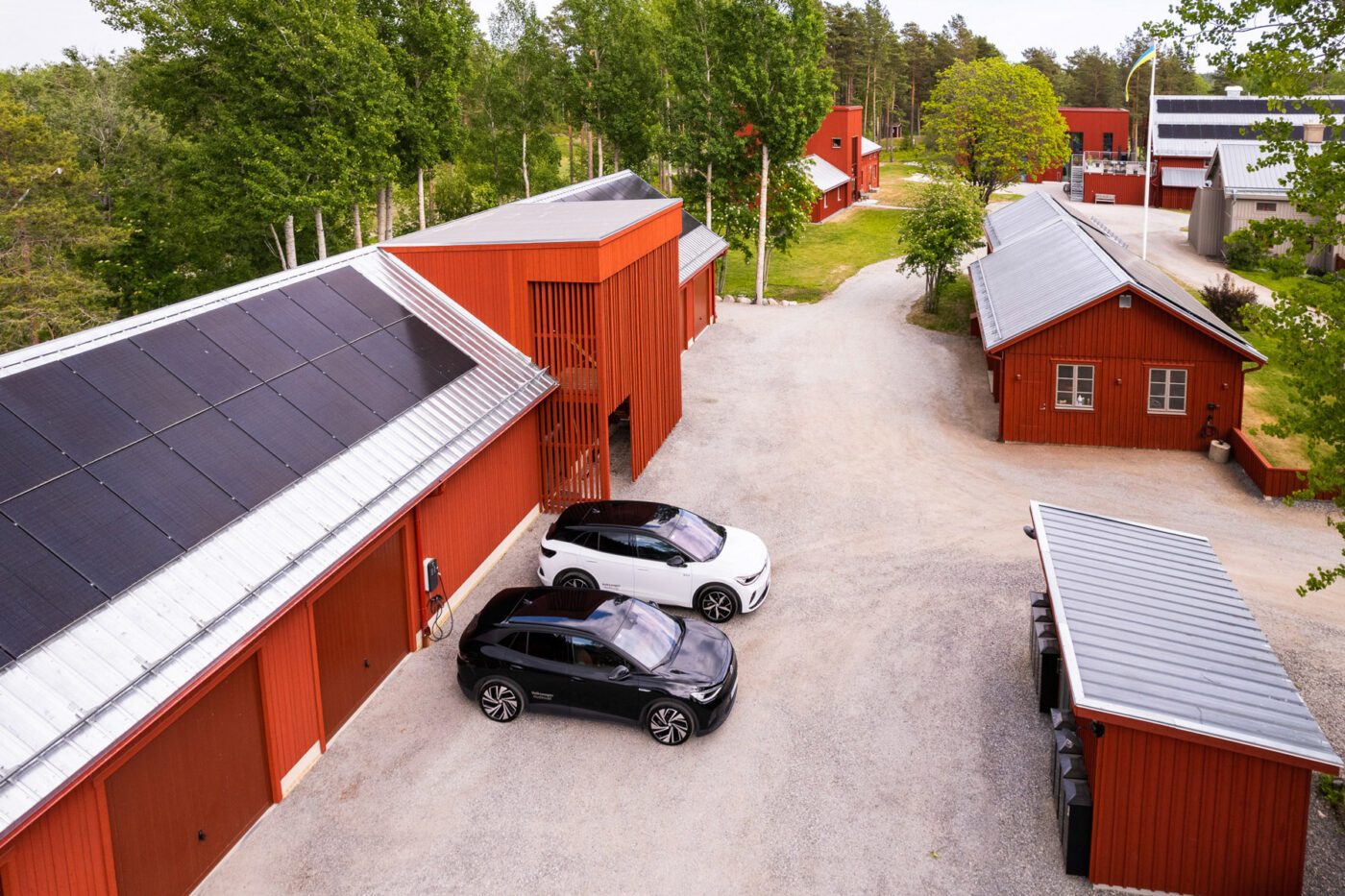
Mandfred Przybilla, CEO of Ambibox, explained on LinkedIn that after more than a year of testing, the project partners Volkswagen, Vattefall, Energybank and Ambibox have decided to leave the “protected environment of the test facility in Stenberg and offer the service to customers.” (Updated below).
The first pilots will include 200 companies and private customers in Sweden, after which the CEO stated that the product will be available to all customers “from autumn, but orders are already being accepted.”
Launched in 2023, for the two years of the project so far, Volkswagen’s ID. models with 77 kWh batteries or larger have been prepared for V2G technology. The new phase of the project aims to expand and ensure the quality of the V2H and V2G pilot project in Hudiksvall in Sweden with Energy Banks and the Stenberg housing association. Aspects that will be focused on in the coming months are functionality, customer experience, savings and potential revenues. The partners state that the goal directly after evaluation is a commercial launch.
Vehicle-to-grid (V2G) and vehicle-to-home (V2H) technology for cars is complicated because it not only involves technology within the charger and the car, but also regulations from electricity providers and the driving habits of the customers involved.
“We would all be lying if we said it was an easy project; we had set ourselves a very ambitious goal. I am confident that we have created something very solid, especially with the software platform that Energybank and ambibox developed and optimised together for V2G with HEMS.”
V2G and V2H technology enables electric vehicle drivers and operators to charge their vehicles when demand on the grid is low, therefore soaking up excess renewable energy power, and alleviating some of the need for grid upgrades and stationary storage. With V2G, drivers can feed energy back into the grid in power outage situations or when demand is high and excess capacity is required.
V2G technology is currently being developed to scale up for general use as automotive companies and charging providers develop customer-facing products. In the Netherlands, V2G is being deployed by the charging provider WeDriveSolar in car-sharing initiatives. The technology of bidirectional charging is currently finding its place in energy storage and management systems as the energy transition drives forward.
Update 16 April 2026
Following the announcement last year of the expansion of the V2G pilot project by Volkswagen and its partners in Sweden, the roll-out across the country now appears to be underway. Following the initial test phase in the Stenberg housing estate in Hudiksvall, Sweden, project partner Energy Bank is set to install 200 bidirectional chargers in electricity price zones SE3 and SE4, which cover central and southern Sweden, according to recent reports.
As mentioned, the expansion to include 200 bidirectional charging points at private households and fleet operators (primarily VW dealers) was announced back in May 2025. Now, Vattenfall and Energy Bank have announced in their own press releases that the approximately 200 charging stations are now being installed.
As with the first trial in Hudiksvall, the Energy Bank’s software platform will be used to optimise and aggregate the charging process, whilst the charging hardware is supplied by the German provider Ambibox. As an energy partner, Vattenfall facilitates the use of aggregated flexibility across various energy and flexibility markets. The 200 vehicles are supplied by VW, whereby participants retain control of their vehicles and receive remuneration based on the flexibility they provide and the energy optimisation they achieve.
Magnus Berg, Manager Customer Products and Solutions, Vattenfall, said, “The results show that bidirectional charging can play an important role in an energy system with more fossil-free electricity. Our collaboration explores how aggregated EV batteries can contribute flexibility and support system balance and stability. If the battery can support the power system and generate revenue, it is a way to improve the economics and value of owning an EV and contribute to further electrification.”
“We are now making the technology available to vehicle owners in Sweden who, together with us, are shaping the path toward commercialisation. Pilot participants play an important role in using V2X in everyday life and contribute insights that are crucial for making the technology work at scale, explained Klas Boman, Project Owner, Energy Bank.
vattenfall.com, linkedin.com, vattenfall.com, energybank.eco (both update)
2 Comments