

2025 balance sheet: VW Group gains momentum in BEVs – especially in Europe
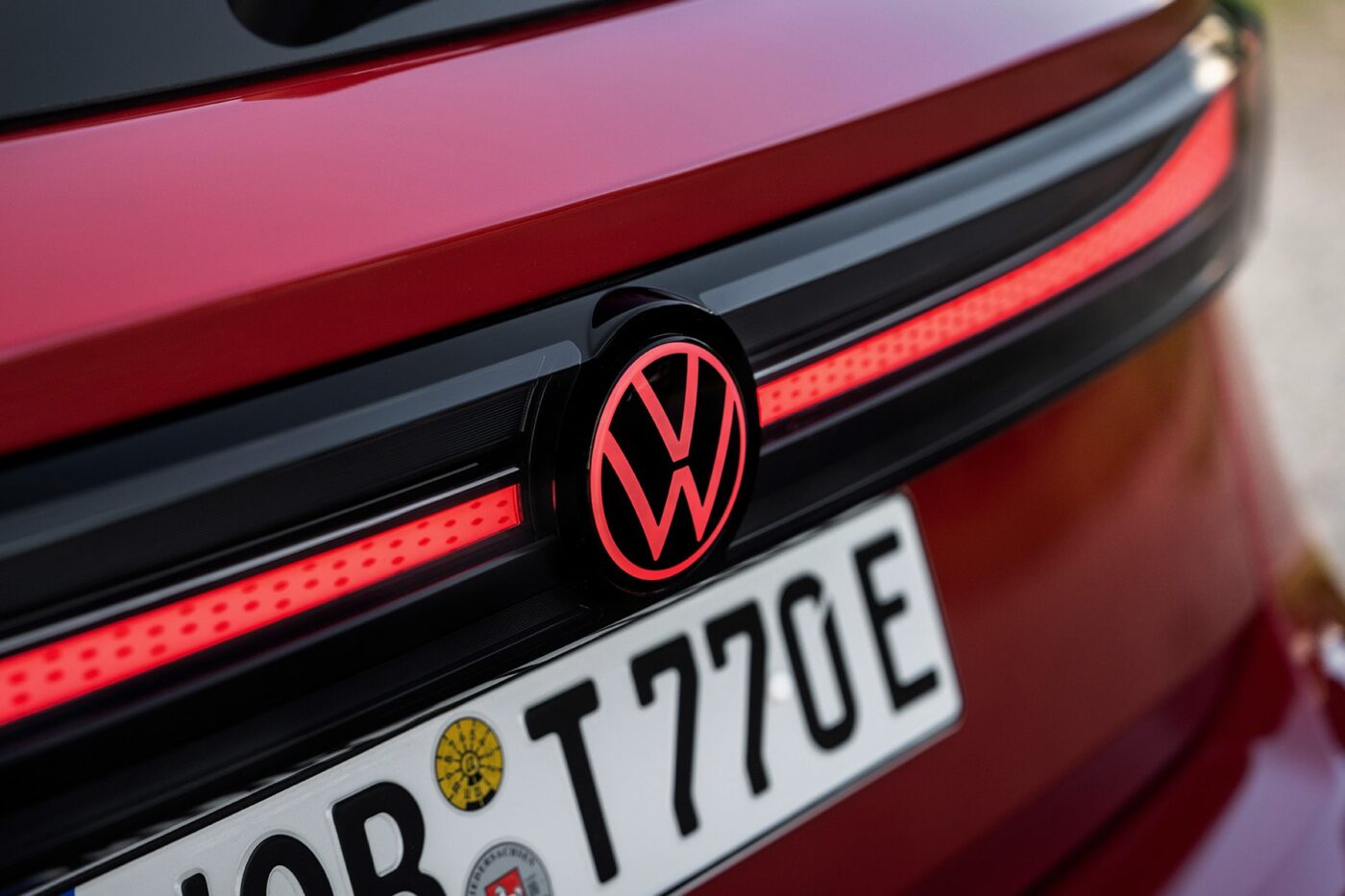
Volkswagen recently shared key statistics via LinkedIn. The Group delivered 983,100 battery-electric vehicles in 2025 (+32% compared to 744,800 fully electric vehicles in 2024), marking a return to growth. In 2024, global electric vehicle sales had declined by 3.4 per cent. Europe remained the primary sales region, with 742,800 BEV sold (+66% year-on-year). A year earlier, the figure stood at 447,600 units. Volkswagen also reported a 58 per cent increase in global plug-in hybrid sales, reaching 428,000 units. However, this is merely a side note.
To summarise: Volkswagen’s electric vehicle statistics are once again positive. In 2025, nearly one in nine new vehicles from the Group was battery-electric. With a share of 10.9 per cent, the Group’s BEV proportion entered double digits for the first time, increasing by 2.7 percentage points compared to 2024. However, the rising share of electric vehicles is not solely due to strong BEV sales: across all drive types, the Wolfsburg-based Group sold 0.5 per cent fewer cars than in 2024. With 8.98 million deliveries, the Group fell just short of the nine-million mark. In Europe, however, Volkswagen bucked the trend with a 3.8 per cent increase. In China and the USA, deliveries declined by 8 and 10.4 per cent, respectively.
Interestingly, the 10 per cent decline in the USA does not reflect the BEV segment: Volkswagen’s electric vehicle sales in the USA grew by 46 per cent to 72,000 units. This occurred despite a disastrous final quarter, with only 3,200 sales, which is naturally linked to the general collapse of the US electric vehicle market following the expiry of the US tax credit on 30 September 2025.
The situation in China presents a starkly different picture: the 8 per cent year-on-year decline in Volkswagen’s total sales is overshadowed by a 44 per cent drop in BEV sales. Only 115,500 electric vehicles from the Group were sold in China. This is unsurprising, given that among the top 20 best-selling New Energy Vehicles (electric vehicles and plug-in hybrids) in China in 2025, only two models were from foreign brands: the Model Y and the Model 3. All other top sellers were from domestic brands. This is a clear indicator of the now mature Chinese electric vehicle market.
| Oct. – Dec. 2025 | Oct. – Dec. 2024 | Delta (%) | Jan. – Dec. 2025 | Jan. – Dec. 2024 | Delta (%) | |
|---|---|---|---|---|---|---|
| Europe | 220,300 | 154,400 | +42.7 | 742,800 | 447,600 | +65.9 |
| USA | 3,200 | 12,300 | -73.6 | 72,000 | 49,400 | +45.7 |
| China | 30,300 | 59,300 | -48.8 | 115,500 | 207,400 | -44.3 |
| Rest of the World | 11,700 | 12,100 | -2.9 | 52,900 | 40,100 | +31.7 |
| World | 265,600 | 238,000 | +11.6 | 983,100 | 744,600 | +32.0 |
| BEV share of global deliveries (%) | 11.2 | 9.5 | +1.6 pts. | 10.9 | 8.2 | +2.7 pts. |
For context: in 2024, the Volkswagen Group had increased its BEV sales in China by 8.1 per cent to 207,400 units, while sales in Europe had declined by 5.2 per cent to 447,900 electric vehicles. The premature expiry of several incentives, including the German environmental bonus, had weighed on the European electric vehicle market in 2024. The situation has since reversed. In Europe, Volkswagen has regained strength and, according to its own figures, now holds a BEV market share of around 27 per cent. Additionally, five Group vehicles are among the continent’s top 10 electric cars.
Let’s examine the developments across individual brands. It was already known that the core brand VW delivered around 382,000 fully electric vehicles worldwide in 2025 (-0.2% year-on-year). The share of fully electric models in total deliveries thus stood at 8.1 per cent. Volkswagen significantly increased its deliveries of fully electric vehicles in 2025, particularly in Germany and Europe. Deliveries rose to 93,800 vehicles in its home market of Germany (+60.7 per cent) and to around 247,900 units across Europe (+49.1 per cent). However, the Group’s volume driver continues to face stagnation on a global scale.
It is the other representatives of the Core brand group—Škoda, Seat/Cupra, and Volkswagen Commercial Vehicles—that are driving growth across all regions. Škoda demonstrates the highest momentum among the Group’s passenger car subsidiaries (+120% year-on-year), achieving 174,900 BEV sales. The Škoda Elroq accounted for 95,300 units, making it the third-best-selling model in the entire Group, behind the ID.4/5 and ID.3. Škoda does not disclose the internal BEV share, but for BEVs and PHEVs combined, the Czechs report a share of 25.7 percent of total Škoda sales. The message is clear: one in four Škoda vehicles sold worldwide in 2025 was plug-in.
Seat/Cupra also delivered impressive results, with 79,700 BEVs sold (+66% year-on-year). Specifically, 43,700 Cupra Born and 36,000 Cupra Tavascan units were sold. BEVs thus accounted for nearly a quarter of Cupra’s sales in 2025 (24.2 percent).
Volkswagen Commercial Vehicles doubled its BEV sales from 28,800 in 2024 to 58,600 in 2025 (+103% year-on-year). This corresponds to a BEV share of 16.4 per cent of VWN’s total sales. The ID. Buzz contributed 60,700 units globally (+102%). Overall, the Core brand group—Volkswagen’s important, high-volume segment—achieved an average BEV growth of 29 per cent.
Next, we turn to the Progressive brand group, which comprises the premium brands Audi, Bentley, and Lamborghini. Here, Audi alone drives the BEV share, as the other two brands’ luxury vehicles are not yet fully electric. Audi improved by 35.6 percent in 2025, delivering 223,000 BEVs. This marks a clear increase compared to 2024, when sales had declined by 8 per cent. The A6 e-tron (37,000 units) and Q6 e-tron (84,000 units) were particularly popular in 2025.
Customer Deliveries by Brand
| Oct. – Dec. 2025 | Oct. – Dec. 2024 | Delta (%) | Jan. – Dec. 2025 | Jan. – Dec. 2024 | Delta (%) | |
|---|---|---|---|---|---|---|
| Core Brand Group | 192,000 | 166,000 | +15.6 | 695,200 | 539,200 | +28.9 |
| Volkswagen Passenger Cars | 94,300 | 111,700 | -15.5 | 382,000 | 382,900 | -0.2 |
| Škoda | 56,300 | 28,800 | +95.7 | 174,900 | 79,600 | +119.8 |
| Seat/Cupra | 22,400 | 16,900 | +32.5 | 79,700 | 48,000 | +65.9 |
| Volkswagen Commercial Vehicles | 19,000 | 8,700 | +117.9 | 58,600 | 28,800 | +103.4 |
| Progressive Brand Group | 59,600 | 48,700 | +22.4 | 223,000 | 164,500 | +35.6 |
| Audi | 59,600 | 48,700 | +22.4 | 223,000 | 164,500 | +35.6 |
| Bentley | – | – | – | – | – | – |
| Lamborghini | – | – | – | – | – | – |
| Sport & Luxury Brand Group | 12,800 | 22,700 | -43.5 | 61,700 | 39,100 | +57.8 |
| Porsche | 12,800 | 22,700 | -43.5 | 61,700 | 39,100 | +57.8 |
| Trucks / TRATON Brand Group | 1,200 | 600 | +91.7 | 3,200 | 1,700 | +85.8 |
| MAN | 880 | 350 | +150.4 | 1,970 | 740 | +167.8 |
| Volkswagen Truck & Bus | 10 | 20 | -70.8 | 60 | 120 | -49.2 |
| Scania | 220 | 80 | +188.3 | 600 | 270 | +126.3 |
| International | 50 | 150 | -64.9 | 590 | 610 | -3.3 |
| Volkswagen Group (total) | 265,600 | 238,000 | +11.6 | 983,100 | 744,600 | +32.0 |
Since the Sport & Luxury brand group consists solely of Porsche, the 57.8 per cent increase to 61,700 BEVs (2024: 39,100 BEVs) is attributable to this single brand. The German sports car manufacturer benefited particularly from developments in the first three quarters, as Q4 saw a sharp decline (-43.5%). Nevertheless, the year-end result shows an upward trend, primarily thanks to the E-Macan, whose market launch in September 2024 only fully took effect in 2025. Specifically, Porsche delivered 45,367 fully electric Macan units and 16,339 Taycan units in the past year. The global share of fully electric vehicles in total sales stood at 22.2 per cent.
Last but not least: in the Trucks/Traton brand group, electric vehicle sales surged by 85.8 percent to 3,200 BEV deliveries, after the Group had endured a 17 per cent decline in BEV sales for this segment in 2024. MAN contributed 1,970 electric commercial vehicles in 2025, up from 740 the previous year (+168% year-on-year), while Scania increased its deliveries to 600 units (+126% year-on-year). In contrast, Volkswagen Truck & Bus (-49% year-on-year) and International (-3.3% year-on-year) lost ground.
Back to the passenger car segment: the Volkswagen Group has also published a compact ranking of its best-selling electric models for 2025, which is as follows:
| Volkswagen ID.4/ID.5 | 163,400 |
| Volkswagen ID.3 | 117,700 |
| Škoda Elroq | 95,300 |
| Audi Q4 e-tron (incl. Sportback) | 84,900 |
| Audi Q6 e-tron (incl. Sportback) | 84,400 |
| Škoda Enyaq (incl. Coupé) | 79,600 |
| Volkswagen ID.7 (incl. Tourer) | 79,500 |
| Volkswagen ID. Buzz (incl. Cargo) | 60,700 |
“The Volkswagen Group was on a solid track in 2025 – despite a challenging market environment,” commented Oliver Blume, CEO of the Volkswagen Group. “We have made good progress in comprehensively renewing our product range. Our new vehicles are receiving an excellent response and have won numerous awards. With more than 20 new models, we will continue our product offensive at full speed in 2026. These include further innovative vehicles from our model offensive in China and our Electric Urban Car Family. Entry-level e-mobility with top technology from Volkswagen, Cupra, and Škoda – the next step on our path to becoming the global automotive tech driver..”
Looking ahead to 2026: the Group reports that BEV order intake in Europe has increased by 55 per cent compared to 2024. Key drivers include new models such as the Škoda Elroq, Audi A6 e-tron, and Volkswagen’s Transporter. For comparison, order intake across all drive types rose by only around 13 per cent.
volkswagen-group.com, audi-mediacenter.com, vwn-presse.de, newsroom.porsche.com, skoda-media.de
0 Comments